
How Many Flight Hours Are Required for a Private Pilot License? FAA Rules Explained
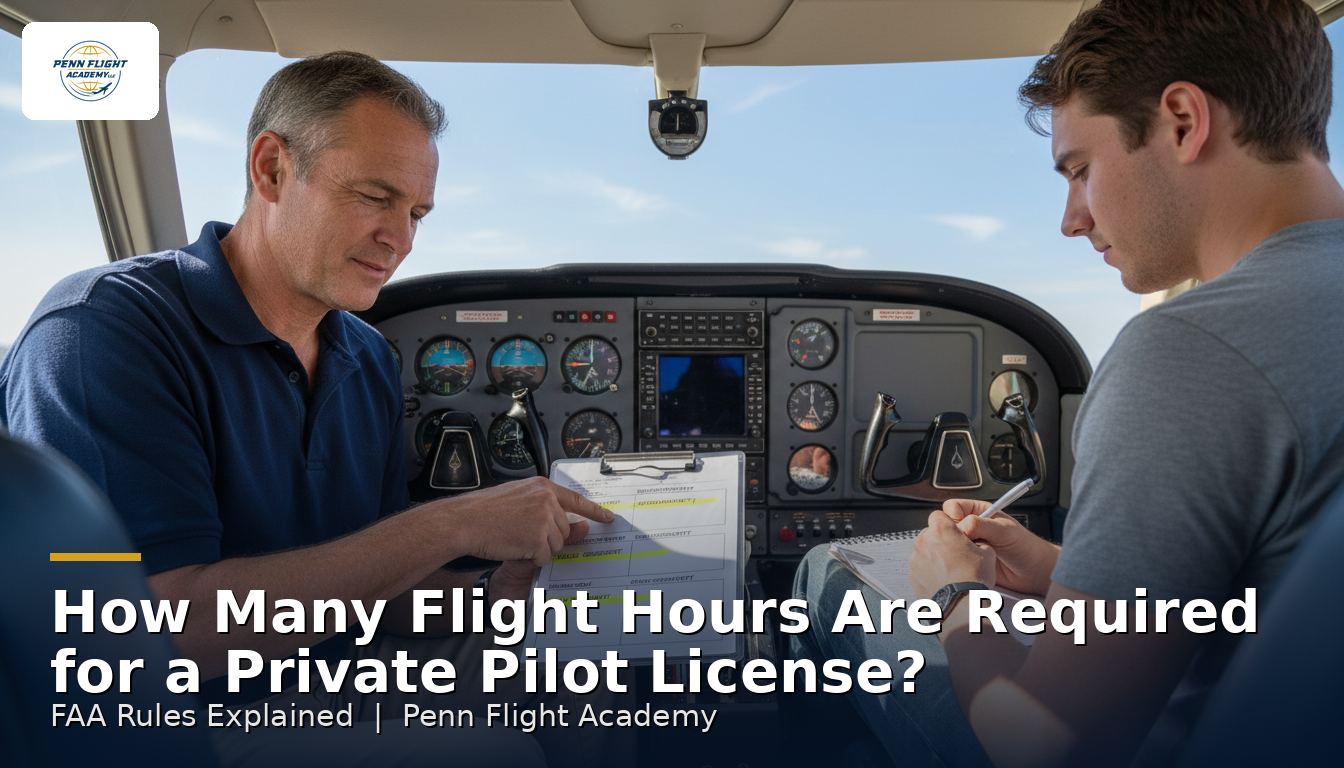
To earn a private pilot license, the FAA requires a minimum of 40 flight hours under Part 61 or 35 hours under an approved Part 141 flight school. However, most student pilots complete between 60 and 75 hours before meeting all training and proficiency requirements. Your total flight time depends on your learning pace, consistency, weather, and instructor guidance.
Key Takeaways
The FAA requires at least 40 hours under Part 61 and 35 hours under Part 141.
Most students need 60–75 flight hours to earn a private pilot license.
Flight hours include dual instruction, solo flying, cross-country flights, and night training.
Consistent PPL flight training usually helps students complete training more efficiently.
Flight proficiency matters more than simply reaching the minimum hour requirement.
Choosing an experienced FAA-certified flight school can improve training quality and confidence.
Understanding the FAA Private Pilot License Requirements
A private pilot license is one of the most popular aviation certifications issued by the Federal Aviation Administration (FAA). It allows individuals to fly aircraft for personal travel, recreation, and proficiency building while serving as the foundation for advanced pilot certifications.
Although many aspiring pilots focus on the required number of flight hours, the FAA emphasizes competency rather than time alone. Every private pilot license must demonstrate safe aircraft operation, sound decision-making, and consistent flying skills before becoming eligible for the practical test.
Meeting the FAA hours requirement is only one part of the certification process. Students must also complete ground training, pass a knowledge exam, and successfully demonstrate their abilities during a practical checkride.
Why Flight Hours Matter More Than You Think
Flight hours are not simply numbers recorded in a logbook. Each hour builds the experience needed to safely operate an aircraft under different conditions.
During training, students gradually learn how to:
Control an aircraft during all phases of flight
Perform safe takeoffs and landings
Communicate with Air Traffic Control
Navigate using visual references and instruments
Respond to changing weather conditions
Handle emergency procedures
Make sound aeronautical decisions
Each lesson builds confidence while reinforcing safe flying habits that continue throughout a pilot's career.
Part 61 Flight Training Requirements
Part 61 provides greater scheduling flexibility and is commonly selected by students who balance training with work, college, or family commitments.
The FAA requires a minimum of:
40 total flight hours
At least 20 hours with an instructor
At least 10 hours of solo flight
Required cross-country experience
Night flight training
Instrument reference training
Because training is individualized, instructors tailor lessons to each student's progress.
Part 141 Flight Training Requirements
Part 141 schools follow an FAA-approved curriculum with structured lesson plans and regular progress evaluations.
Students must complete at least:
35 total flight hours
FAA-approved syllabus requirements
Stage checks throughout training
Standardized lesson progression
While Part 141 has a lower minimum hour requirement, students must successfully complete every stage before advancing.
Training Frequency
Flying two to four times each week allows students to retain skills more effectively.
Long breaks often require reviewing previous lessons, increasing total flight time.
Weather Conditions
Poor weather may delay scheduled lessons, particularly during cross-country and solo training.
Students training in regions with favorable flying weather often complete training sooner.
Learning Pace
Every student learns differently.
Some quickly master aircraft control, while others need additional practice before consistently meeting FAA standards.
Instructor Continuity
Working consistently with the same instructor often improves learning efficiency because the instructor understands your strengths, weaknesses, and progress.
Breakdown of FAA Flight Hour Requirements
The FAA requires experience in several types of flying before issuing a private pilot certificate.
Dual Instruction
Dual instruction refers to flights completed with a Certified Flight Instructor (CFI).
During these lessons, students learn:
Aircraft familiarization
Taxi procedures
Normal and crosswind takeoffs
Landings
Emergency operations
Stalls
Slow flight
Ground reference maneuvers
Navigation
Instructor-led lessons build the foundation for safe solo flight.
Solo Flight Time
One of the most exciting milestones in aviation training is completing your first solo flight.
Solo training allows students to:
Practice independently
Build confidence
Improve decision-making
Demonstrate readiness for advanced maneuvers
The FAA requires a minimum amount of supervised solo experience before students become eligible for certification.
Cross-Country Flight Training
Cross-country flying teaches pilots how to safely travel between airports using navigation techniques and flight planning.
Students learn how to:
Plan flight routes
Calculate fuel requirements
Interpret aviation weather
Communicate with multiple ATC facilities
Navigate unfamiliar airports
These flights develop practical real-world flying experience.
Night Flight Training
Flying after sunset introduces unique challenges.
Students complete night training that includes:
Night takeoffs
Night landings
Airport lighting recognition
Night navigation
Emergency procedures
Night experience helps pilots become comfortable operating in reduced visibility conditions.
Instrument Flight Training
Even though a private pilot license does not authorize instrument flight in clouds, every student receives basic instrument instruction.
Training includes:
Maintaining aircraft control using instruments
Recovering from limited visibility scenarios
Basic instrument scanning techniques
Situational awareness
This instruction prepares pilots to safely handle unexpected situations.
Step-by-Step Guide to Earning a Private Pilot License
Understanding the overall certification process helps students prepare for each milestone.
Step 1: Obtain a Student Pilot Certificate
Before flying solo, students must obtain an FAA Student Pilot Certificate.
This certificate allows supervised flight training under an authorized instructor.
Step 2: Complete Ground School
Ground training introduces the knowledge every pilot needs before operating an aircraft.
Topics include:
Aerodynamics
Weather
Navigation
Aircraft systems
FAA regulations
Airspace
Flight planning
Aviation safety
Students may complete ground school in person or through online learning programs.
Step 3: Begin PPL Flight Training
Flight lessons gradually build practical skills.
Each lesson introduces new maneuvers while reinforcing previous training.
Regular flying schedules help students progress efficiently and develop confidence behind the controls.
Step 4: Pass the FAA Knowledge Test
Before taking the practical exam, student pilots must successfully complete the FAA Private Pilot Knowledge Test.
The written examination covers:
FAA regulations
Aircraft performance
Weather interpretation
Navigation
Aeromedical factors
Flight operations
A strong understanding of aviation theory supports safer decision-making in the cockpit.
Step 5: Complete the Required Flight Hours
As you progress through your PPL flight training, your instructor will record every lesson in your logbook. Although the FAA establishes minimum flight hour requirements, your training continues until you consistently demonstrate safe aircraft operation and meet the Airman Certification Standards (ACS).
Rather than focusing only on the total number of hours, aim to build confidence and proficiency in:
Aircraft control during all phases of flight
Navigation and cross-country planning
Radio communication
Emergency procedures
Weather awareness
Decision-making and risk management
Your instructor will determine when you're ready for the next stage of training based on your performance.
Step 6: Pass the Practical Test (Checkride)
The final step toward earning your private pilot license is the FAA practical examination, commonly called the checkride.
The checkride consists of two parts:
Oral Examination
The examiner evaluates your understanding of:
FAA regulations
Aircraft systems
Weather interpretation
Flight planning
Airspace classifications
Aircraft performance
Aeronautical decision-making
Flight Examination
During the flight portion, you'll demonstrate your ability to safely perform required maneuvers, including:
Preflight inspection
Normal and crosswind takeoffs
Landings
Emergency procedures
Slow flight
Stalls
Navigation
Short-field and soft-field operations
Basic instrument flying
Successfully completing both portions earns you your FAA Private Pilot Certificate.
Benefits of Earning a Private Pilot License
A private pilot license opens opportunities beyond recreational flying. It provides practical skills, personal freedom, and a solid foundation for advanced aviation training.
Some of the key benefits include:
Greater Travel Flexibility
Pilots can travel directly to thousands of public airports, avoiding many delays associated with commercial airline schedules.
Strong Foundation for Advanced Ratings
A private pilot certificate is the first step toward earning:
Instrument Rating
Commercial Pilot Certificate
Certified Flight Instructor (CFI)
Multi-Engine Rating
Airline Transport Pilot (ATP) Certificate
Increased Confidence
Flying develops valuable life skills such as:
Decision-making
Problem-solving
Situational awareness
Time management
Responsibility
Recreational Flying
Many pilots enjoy flying with family and friends, exploring new destinations, or participating in aviation events and fly-ins.
Career Opportunities
Although a private pilot license does not allow pilots to fly commercially for compensation, it serves as the starting point for those pursuing professional aviation careers.
Best Practices for Completing PPL Flight Training Efficiently
Students who complete training efficiently usually follow consistent learning habits.
Fly Regularly
Flying at least two or three times each week helps reinforce previously learned skills and minimizes the need for review lessons.
Study Between Flights
Reading the Pilot's Operating Handbook (POH), FAA publications, and reviewing lesson materials before each flight improves learning efficiency.
Ask Questions
Never hesitate to ask your instructor for clarification. Understanding the "why" behind procedures builds stronger aviation knowledge.
Chair Fly at Home
Many instructors recommend mentally rehearsing procedures before arriving at the airport.
This technique helps students remember:
Checklists
Radio calls
Emergency procedures
Cockpit flows
Stay Organized
Keep your:
Logbook
Medical certificate
Student pilot certificate
Training materials
Flight planning documents
organized throughout your training.
Common Mistakes Student Pilots Should Avoid
Many students unintentionally increase training time by developing habits that slow their progress.
Flying Too Infrequently
Long breaks between lessons often result in skill regression and additional review flights.
Focusing Only on Flight Hours
Meeting the FAA minimum does not automatically mean you're ready for the checkride.
Your goal should always be proficiency.
Poor Ground School Preparation
Students who neglect aviation knowledge often struggle during both the written examination and practical test.
Ignoring Instructor Feedback
Each lesson includes valuable feedback designed to improve safety and consistency.
Applying instructor recommendations accelerates learning.
Rushing the Process
Learning to fly safely takes patience.
Attempting to progress too quickly can create unnecessary stress and reduce long-term confidence.
Expert Tips for Success
Experienced flight instructors often recommend the following strategies:
Choose a flight school with experienced FAA-certified instructors.
Schedule lessons consistently throughout the month.
Prepare before every lesson.
Maintain realistic expectations about training duration.
Practice good cockpit organization.
Learn from every flight, including mistakes.
Stay current with FAA publications and safety guidance.
Focus on becoming a safe pilot rather than simply passing the checkride.
Practical Example
Consider two student pilots beginning training at the same time.
Student A flies three times each week, studies after every lesson, and consistently reviews instructor feedback.
Student B schedules one lesson every two or three weeks and rarely studies between flights.
Although both students meet the same FAA training requirements, Student A is likely to complete training in fewer total flight hours because skills remain fresh and progress continues steadily.
This example demonstrates why consistency often matters more than the published minimum hour requirement.
Frequently Asked Questions
How many flight hours are required for a private pilot license?
The FAA requires a minimum of 40 hours under Part 61 or 35 hours under Part 141. However, most students complete training with approximately 60 to 75 flight hours.
Why do most students need more than the FAA minimum?
The FAA minimum represents eligibility, not guaranteed proficiency. Additional training is often needed to develop consistent flying skills and prepare for the practical test.
Can I earn a private pilot license in a few months?
Yes. Students who fly regularly and study consistently often complete PPL flight training within four to eight months, depending on scheduling, weather, and individual progress.
Is there an age requirement for a private pilot license?
Applicants must be at least 17 years old to receive a private pilot certificate. Student pilots may begin training earlier under FAA regulations.
Is ground school required?
Yes. Every student pilot must complete ground training and pass the FAA Private Pilot Knowledge Test before taking the practical examination.
Conclusion
Earning a private pilot license is an exciting achievement that combines classroom learning, practical flight experience, and a commitment to aviation safety. While the FAA requires a minimum number of flight hours, most students benefit from additional practice to build confidence and meet proficiency standards.
By understanding the FAA hours requirement, following a consistent PPL flight training schedule, and working closely with experienced instructors, you'll be well prepared for the FAA knowledge test, checkride, and a lifetime of safe flying.
Whether your goal is recreational flying, personal travel, or pursuing a professional aviation career, quality flight training is the foundation for long-term success.
Contact Penn Flight
If you're ready to begin your journey toward earning a private pilot license, Penn Flight offers professional flight training with experienced instructors, well-maintained aircraft, and a supportive learning environment. Contact us today to learn more about our training programs, schedule a discovery flight, or speak with our team about the next steps toward becoming a certified pilot.
