
How to Become a Commercial Pilot in Pennsylvania: Step-by-Step Training, Cost & Requirements
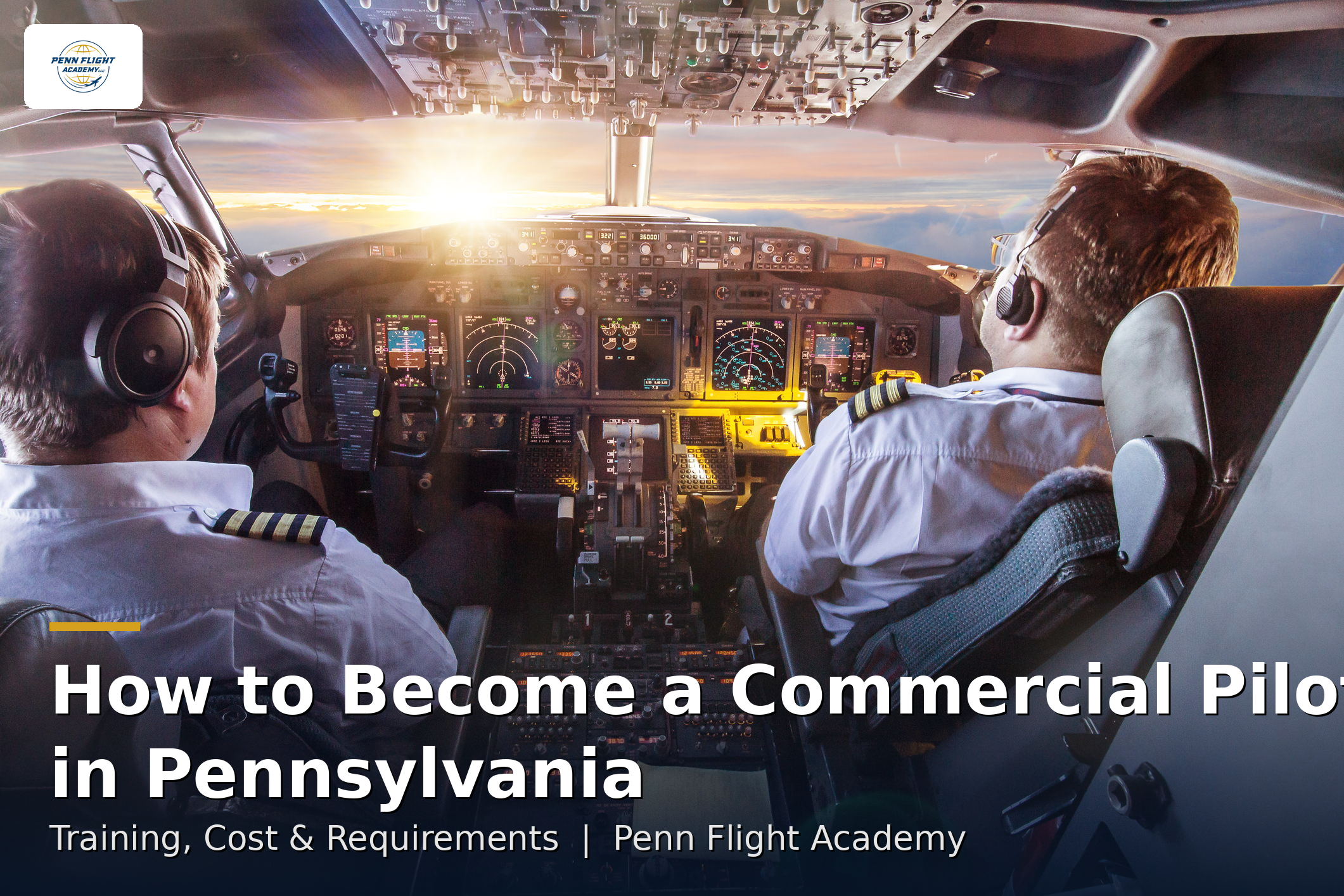
Commercial pilot licence training in Pennsylvania involves earning a Private Pilot Certificate, Instrument Rating, Commercial Pilot Certificate, and meeting FAA flight hour requirements. Depending on your training schedule, it typically takes 18 to 36 months and prepares you for careers in charter aviation, corporate flying, aerial survey, flight instruction, and other commercial aviation roles.
Key Takeaways
Learn the complete pathway to earning your commercial pilot certificate.
Understand FAA eligibility requirements before beginning training.
Explore the average cost of commercial pilot licence training.
Discover how long commercial flight training typically takes.
Learn which ratings and certifications employers value most.
Avoid common mistakes that delay pilot training.
Understand career opportunities after becoming a commercial pilot.
Introduction
A career as a commercial pilot offers exciting opportunities, competitive earning potential, and the chance to fly professionally in a wide variety of aviation sectors. Whether your goal is to become a charter pilot, corporate pilot, cargo pilot, aerial survey pilot, or eventually an airline captain, every professional pilot begins with proper commercial pilot licence training.
Pennsylvania is an excellent place to begin your aviation journey. With diverse airspace, changing weather conditions that build real-world experience, and access to FAA-certified flight schools, aspiring pilots gain practical knowledge that prepares them for professional aviation careers.
Unlike many online guides that focus only on flight hour requirements, this guide explains every step from eligibility and training costs to FAA requirements, career options, and practical advice for choosing the right flight school.
Why Choose Commercial Pilot Licence Training in Pennsylvania?
Pennsylvania provides an ideal environment for aspiring commercial pilots because students experience a variety of flying conditions throughout the year. Training in different weather patterns and controlled airspace helps develop confidence and decision-making skills.
Some advantages include:
FAA-certified flight schools
Diverse flying environments
Access to experienced flight instructors
Opportunities for cross-country flight experience
Strong aviation community
Convenient airports for training
Pathways toward airline careers
Students who complete their flight training commercial pilot licence in Pennsylvania often graduate with valuable real-world flying experience that employers appreciate.
What Is a Commercial Pilot Certificate?
A commercial pilot certificate is an FAA certification that allows qualified pilots to receive compensation for flying aircraft.
Unlike a Private Pilot Certificate, which only permits recreational or personal flying, a Commercial Pilot Certificate opens the door to professional aviation careers.
Commercial pilots may work in:
Charter aviation
Corporate aviation
Flight instruction
Cargo operations
Agricultural aviation
Pipeline patrol
Aerial photography
Air tours
Banner towing
Emergency support operations
Many commercial pilots eventually continue their training to become airline transport pilots.
Benefits of Earning a Commercial Pilot Certificate
Becoming a commercial pilot provides far more than the ability to fly for compensation.
Some of the biggest benefits include:
Professional Career Opportunities
Commercial pilots have access to numerous aviation careers beyond the airlines.
Higher Income Potential
Professional pilots typically earn significantly more than recreational pilots because they can legally operate aircraft for compensation.
Advanced Flying Skills
Commercial training develops:
Precision flying
Complex aircraft operations
Emergency procedures
Aeronautical decision-making
Risk management
Crew coordination
Career Flexibility
A commercial certificate allows pilots to work in many aviation industries before choosing a long-term specialization.
FAA Requirements for Commercial Pilot Licence Training
Before beginning commercial training, applicants must meet FAA eligibility requirements.
Minimum Age
Applicants must be at least 18 years old to receive a Commercial Pilot Certificate.
English Proficiency
Pilots must be able to:
Read English
Write English
Speak English
Understand English
This ensures safe communication with air traffic control.
Medical Certificate
Students must obtain an FAA Medical Certificate from an Aviation Medical Examiner (AME).
Maintaining medical eligibility is essential throughout a pilot's professional career.
Private Pilot Certificate
Before earning a commercial certificate, students must first complete Private Pilot training.
Instrument Rating
Although not legally required in every commercial flying situation, most employers strongly prefer pilots with an Instrument Rating.
Step-by-Step Guide to Becoming a Commercial Pilot
Following the correct training sequence makes the journey more efficient and prepares students for long-term aviation careers.
Step 1: Meet FAA Eligibility Requirements
Before enrolling in flight school:
Verify age requirements
Obtain an FAA Medical Certificate
Gather required identification
Research FAA-approved flight schools
Starting with a clear understanding of FAA regulations helps avoid delays later in training.
Step 2: Earn Your Private Pilot Certificate
The Private Pilot Certificate is the foundation of every aviation career.
During this stage, students learn:
Aircraft systems
Flight controls
Airport operations
Radio communication
Navigation
Weather interpretation
Takeoffs and landings
Emergency procedures
Students also complete:
Ground school
FAA Knowledge Test
Solo flights
Cross-country flights
FAA Practical Test (Checkride)
This stage builds the confidence and flying skills needed for advanced commercial training.
Step 3: Obtain an Instrument Rating
Professional pilots frequently fly in changing weather conditions where visibility may be limited.
An Instrument Rating teaches pilots to safely operate aircraft using cockpit instruments rather than relying solely on outside visual references.
Training includes:
Instrument approaches
Holding procedures
IFR navigation
Air traffic control communication
Flight planning
Weather analysis
Instrument cross-country flights
This rating significantly improves both safety and employment opportunities.
Step 4: Build the Required Flight Experience
Before earning a commercial pilot certificate, pilots must accumulate the FAA-required flight experience.
Typical flight experience includes:
Total flight hours
Pilot-in-command (PIC) time
Cross-country flying
Night flying
Dual instruction
Solo flying
Complex or technically advanced aircraft training (where applicable)
Building flight time develops confidence, improves decision-making, and prepares pilots for the advanced maneuvers and responsibilities required during commercial pilot training.
Step 5: Begin Commercial Pilot Licence Training
Once you've earned your Private Pilot Certificate, Instrument Rating, and accumulated the required flight experience, you're ready to begin commercial pilot licence training.
This phase focuses on developing the precision, professionalism, and advanced decision-making skills expected of commercial pilots.
During commercial training, students learn:
Advanced aircraft control
Precision takeoffs and landings
Steep spirals
Chandelles
Lazy eights
Eights on pylons
Emergency operations
Commercial flight planning
Risk management
Professional cockpit procedures
Your instructor will prepare you for the FAA Commercial Pilot Airman Certification Standards (ACS), ensuring you're ready for the practical test.
Skills You'll Develop During Commercial Pilot Training
Professional pilots need much more than the ability to fly an aircraft.
Commercial pilot training develops:
Aircraft Handling Skills
Precision control
Smooth landings
Advanced maneuvers
Energy management
Aeronautical Decision-Making
Students learn how to evaluate:
Weather risks
Aircraft performance
Airport conditions
Operational limitations
Professional Communication
Effective communication with:
Air Traffic Control (ATC)
Crew members
Passengers
Ground personnel
Risk Management
Safe decision-making is a critical part of every commercial flight.
Students practice identifying, evaluating, and mitigating operational risks before and during each flight.
Career Opportunities After Earning Your Commercial Pilot Certificate
A commercial pilot certificate opens the door to a variety of aviation careers.
Some common career paths include:
Charter Pilot
Corporate Pilot
Flight Instructor (after obtaining CFI certification)
Cargo Pilot
Aerial Survey Pilot
Agricultural Pilot
Banner Tow Pilot
Air Tour Pilot
Pipeline Patrol Pilot
Ferry Pilot
Many pilots use these roles to gain experience before pursuing an Airline Transport Pilot (ATP) Certificate and airline careers.
Best Practices for Successful Commercial Pilot Training
Following proven strategies can help you complete your training more efficiently.
Fly Consistently
Frequent flight lessons help reinforce skills and reduce the need for review sessions.
Study Between Flights
Reviewing FAA materials, procedures, and aircraft systems outside the cockpit improves retention and confidence.
Practice Good Time Management
Balancing flight lessons, ground school, and personal commitments helps maintain steady progress.
Stay Physically and Mentally Prepared
Adequate rest, hydration, and preparation contribute to safer, more effective training.
Ask Questions
Take advantage of your instructors' experience. Clarifying concepts early helps prevent misunderstandings later.
Common Mistakes to Avoid
Many student pilots encounter avoidable setbacks during training.
Choosing a Flight School Based Only on Cost
Lower tuition doesn't always provide the best training value. Consider instructor experience, aircraft availability, and safety culture.
Flying Infrequently
Long gaps between lessons can slow progress and increase training costs.
Neglecting Ground School
A solid understanding of aviation theory supports safer and more confident flying.
Underestimating Weather Delays
Pennsylvania's seasonal weather can affect training schedules. Build flexibility into your timeline.
Ignoring Physical Fitness
Maintaining good health helps you meet FAA medical requirements throughout your aviation career.
Practical Example
Sarah, a college graduate in Pennsylvania, wanted to transition into aviation as a full-time career. She enrolled in a local FAA-certified flight school and completed her Private Pilot Certificate in five months while studying part-time.
After earning her Instrument Rating and building the required flight experience, she completed her commercial pilot licence training and earned her commercial pilot certificate. She then became a Certified Flight Instructor (CFI), allowing her to gain valuable flight hours while helping train new pilots.
Within a few years, Sarah accumulated enough experience to qualify for regional airline opportunities, demonstrating how structured training and consistent dedication can lead to a successful aviation career.
Frequently Asked Questions
1. How long does it take to earn a commercial pilot certificate?
The time required depends on your training schedule, previous flight experience, weather conditions, and aircraft availability. Most students complete their commercial pilot licence training in approximately 18 to 36 months, including earning a Private Pilot Certificate, Instrument Rating, and the required flight experience.
2. What are the FAA requirements for a commercial pilot certificate?
To earn a commercial pilot certificate, you must:
Be at least 18 years old.
Read, write, speak, and understand English.
Hold at least a Private Pilot Certificate.
Obtain an FAA Medical Certificate.
Meet the FAA-required flight experience.
Pass the FAA Knowledge Test.
Successfully complete the FAA Practical Test (Checkride).
3. How much does commercial pilot licence training cost?
Training costs vary depending on the flight school, aircraft type, instructor rates, and the number of hours needed. In general, students should expect to invest approximately $45,000 to $70,000 or more to complete all required training from Private Pilot through Commercial Pilot Certificate.
4. Can I become a commercial pilot without a college degree?
Yes. The FAA does not require a college degree to obtain a commercial pilot certificate. However, some airline employers may prefer or require a bachelor's degree for certain pilot positions.
5. What jobs can I get with a commercial pilot certificate?
A commercial pilot certificate qualifies you for a variety of professional flying careers, including:
Charter Pilot
Corporate Pilot
Flight Instructor
Cargo Pilot
Aerial Survey Pilot
Agricultural Pilot
Banner Tow Pilot
Air Tour Pilot
Pipeline Patrol Pilot
Many pilots use these roles to gain flight experience before advancing to airline careers.
Why Choose Penn Flight?
Selecting the right flight school is one of the most important decisions you'll make as an aspiring pilot. At Penn Flight, students receive professional flight instruction designed to build confidence, technical knowledge, and real-world flying experience.
Our training programs focus on:
FAA-compliant flight training
Experienced and knowledgeable flight instructors
Well-maintained training aircraft
Personalized instruction based on individual learning goals
Flexible scheduling options
Comprehensive ground school support
A safe and professional training environment
Whether you're beginning your aviation journey or working toward your commercial pilot certificate, our goal is to help you develop the skills needed for long-term success in the aviation industry.
Final Checklist Before Starting Flight Training
Before enrolling in a flight school, ask yourself the following questions:
Have I confirmed that I meet the FAA eligibility requirements?
Have I scheduled an FAA medical examination?
Have I researched FAA-certified flight schools?
Do I understand the estimated cost of training?
Have I created a financial plan for my flight education?
Can I commit to a consistent training schedule?
Have I discussed my long-term aviation career goals with a flight instructor?
Completing these steps before beginning training will help ensure a smoother learning experience and keep you on track toward earning your commercial pilot certificate.
Conclusion
Pursuing commercial pilot licence training is an exciting step toward a rewarding career in professional aviation. While the journey requires dedication, discipline, and significant flight experience, it also opens the door to a wide range of opportunities in charter aviation, corporate flying, cargo operations, flight instruction, and beyond.
By understanding the FAA requirements, selecting the right training program, building consistent flight experience, and avoiding common mistakes, you'll be well-prepared to earn your commercial pilot certificate and begin your career with confidence.
If you're ready to start your aviation journey, Penn Flight is here to help. Our experienced instructors, FAA-compliant training programs, and student-focused approach provide the guidance and support you need every step of the way.
Contact Us
Interested in learning more about our commercial pilot licence training programs?
Contact us today to speak with our team, explore your training options, schedule a tour, or discuss the best path toward earning your commercial pilot certificate. We're here to help you take the next step toward your future in aviation.
