
PPL vs Commercial Pilot License: What's the Difference?
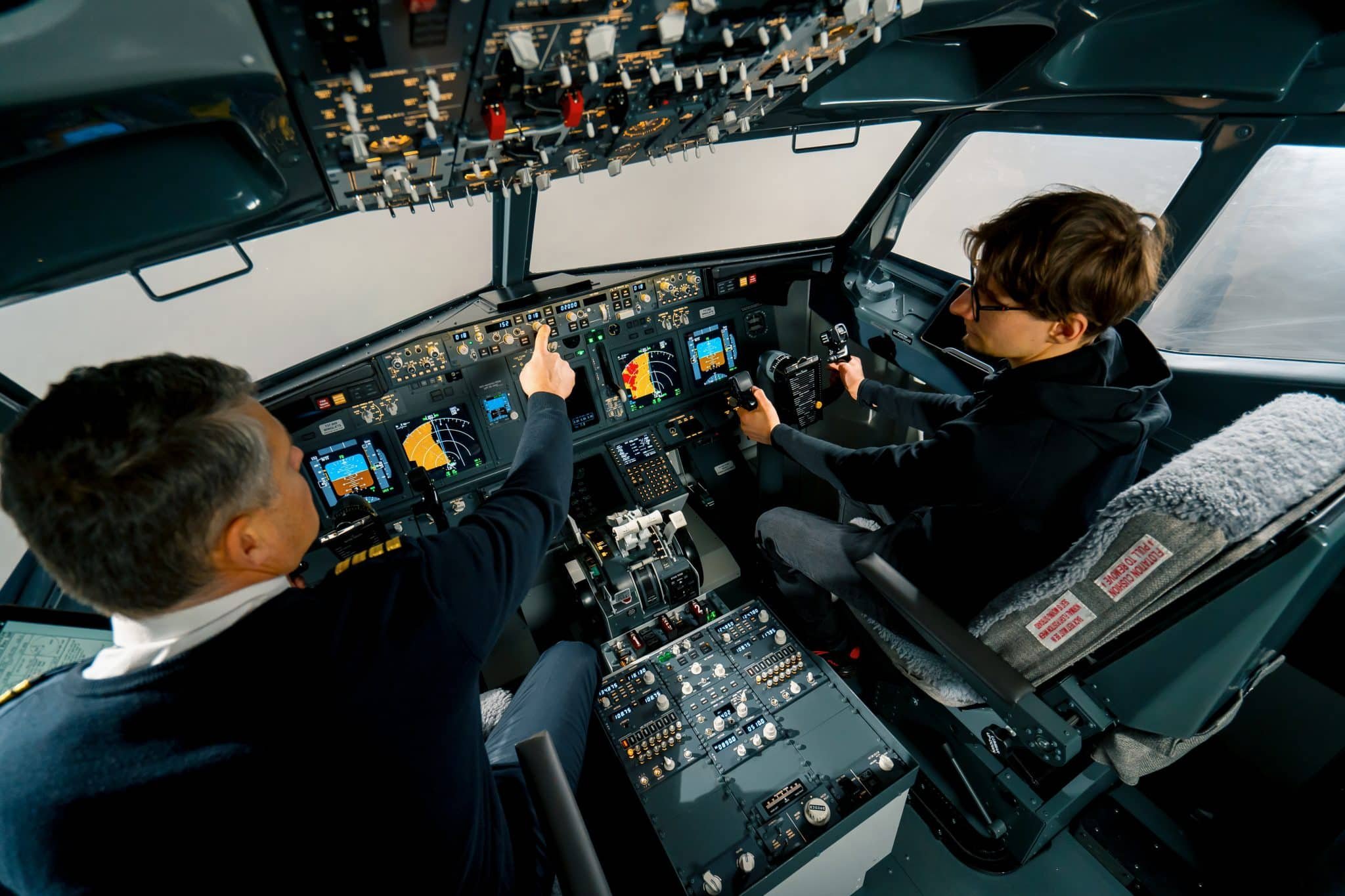
If you're thinking about becoming a professional pilot, one of the first questions you'll encounter is: What's the difference between a Private Pilot License (PPL) and a Commercial Pilot License?
The short answer is that a Private Pilot Certificate is primarily the foundation for personal flying, while a Commercial Pilot Certificate allows a qualified pilot to exercise specific commercial privileges under FAA regulations.
But the difference is more significant than simply whether you can get paid to fly.
The two certificates represent different stages of pilot development. A PPL teaches you the fundamentals of safely operating an aircraft, while commercial pilot training builds on those skills with higher standards of precision, aeronautical decision-making, and professional-level flying.
If your ultimate goal is to fly for a living, understanding the difference between a PPL and commercial certificate can help you plan the right training sequence, budget, and career path.
For students considering commercial pilot licence training in Pennsylvania, Penn Flight Academy offers a progression that includes Private Pilot, Instrument Rating, Commercial Pilot, Multi-Engine, CFI/CFII, MEI, and ATP training from its base at Quakertown Airport.
A PPL allows you to fly for personal purposes and carry passengers, but generally not to act as pilot in command for compensation or hire. A Commercial Pilot Certificate allows you to exercise additional privileges for compensation or hire when the operation meets applicable FAA requirements. For most career-focused pilots, the typical progression is PPL → Instrument Rating → Commercial Pilot → additional ratings and experience.
Key Takeaways
A PPL is the foundation for most civilian pilot careers.
A Commercial Pilot Certificate is an advanced certificate, not simply a "paid PPL."
You generally need to be 18 years old to receive a commercial pilot certificate.
Under the standard Part 61 pathway, the commercial airplane certificate requires 250 hours of flight time, with additional specific aeronautical experience requirements.
An instrument rating is an important part of the professional-pilot pathway.
A commercial certificate does not automatically qualify you to fly for an airline.
Airline pilots generally continue building experience and eventually pursue an Airline Transport Pilot (ATP) certificate.
Your total cost depends heavily on aircraft rates, instructor time, training frequency, and how many hours you need beyond regulatory minimums.
Part 61 and Part 141 are different training frameworks; the right choice depends on your goals, schedule, and school.
If you're still deciding whether aviation should become a career, a discovery flight is a practical place to start.
What Is a Private Pilot Certificate?
A Private Pilot Certificate, commonly called a PPL, is the starting point for many civilian pilots.
It allows a pilot to operate an aircraft for personal purposes and carry passengers, subject to the limitations of the certificate and applicable FAA regulations.
For someone who simply wants to fly recreationally, a PPL may be the primary goal.
For someone who wants to become a professional pilot, however, the PPL is the beginning rather than the destination.
What Can You Do With a PPL?
A private pilot can generally:
Fly for personal transportation.
Take friends and family flying.
Conduct recreational flights.
Build cross-country experience.
Continue toward advanced ratings.
Use the certificate as the foundation for professional flight training.
A private pilot generally cannot simply accept payment for acting as pilot in command.
That distinction is what makes the commercial certificate an important next step for career-focused pilots.
What Is a Commercial Pilot Certificate?
In the United States, the FAA officially refers to this credential as a Commercial Pilot Certificate.
You may also hear people call it a:
Commercial Pilot License
Commercial Pilot Licence
CPL
Commercial Certificate
These terms are often used interchangeably in everyday aviation discussions and online searches.
A commercial certificate provides additional privileges that can allow a pilot to receive compensation or hire for qualifying operations, provided all applicable regulations are satisfied. The FAA specifically notes that a commercial certificate is one of the certification requirements used in professional aviation, while individual employers may impose experience requirements well above FAA minimums.
PPL vs Commercial Pilot License Requirements
The requirements become more demanding as you progress.
Private Pilot Requirements
For a typical airplane private pilot certificate under Part 61, you must meet FAA eligibility and training requirements, including the required aeronautical experience, knowledge test, and practical test.
The FAA minimum is 40 hours of flight time, although many students need more time to reach consistent proficiency.
Penn Flight Academy states that its PPL students typically average approximately 50–60 hours, illustrating why the regulatory minimum should not be treated as a guaranteed completion time.
Commercial Pilot Requirements
For an airplane commercial pilot certificate under the standard Part 61 pathway, the requirements include:
Be at least 18 years old.
Hold the appropriate pilot certificate.
Meet the required aeronautical experience.
Complete the required commercial pilot training.
Pass the FAA knowledge test.
Pass the FAA practical test.
Penn Flight Academy currently lists 250 hours of flight time for its Part 61 commercial pilot pathway, along with additional PIC, cross-country, instrument and training requirements.
The FAA also emphasizes that the 250-hour commercial certificate minimum should not be confused with the experience requirements airlines establish when hiring pilots. Airlines can require substantially more experience.
Commercial Pilot Certificate Requirements: The 250-Hour Rule
One of the most important concepts for prospective students is the difference between the commercial certificate minimum and the experience needed for an actual airline career.
Under the Part 61 pathway, the commercial airplane certificate involves 250 hours of flight time and specific aeronautical experience requirements.
Penn Flight Academy's current requirements page breaks its commercial training requirements into categories including:
250 hours total flight time
100 hours in powered aircraft
50 hours in airplanes
100 hours pilot-in-command time
50 hours of airplane PIC time
50 hours cross-country time
10 hours of airplane cross-country time
Required commercial training
Required instrument training
Required complex or technically advanced airplane training
Required solo or PIC cross-country/night experience
The exact applicability of individual requirements depends on the certificate, category/class, training pathway, and regulatory provisions involved, so your instructor should review your logbook and training plan rather than relying on a generic hour checklist.
Why the Instrument Rating Matters
A common mistake among new aviation students is to think:
PPL → Commercial → Airline
In practice, an instrument rating is a critical part of the professional training pathway.
Instrument training develops skills in:
IFR flight planning
Instrument approaches
Navigation
ATC communication
Weather interpretation
Aircraft control by reference to instruments
Workload management
Risk management
For someone planning a career in aviation, these skills become increasingly important as training progresses.
Penn Flight Academy lists the Instrument Rating between Private Pilot and Commercial Pilot in its training progression.
PPL vs Commercial Pilot License: Training Difference
The commercial course isn't simply a longer version of private pilot training.
The standards change.
During private pilot training, you're learning to become a safe, competent pilot.
During commercial pilot training, you're expected to demonstrate a more refined level of aircraft control, precision, planning, and professionalism.
Private Pilot Training Focus
Typical PPL training develops:
Basic aircraft control
Takeoffs and landings
Traffic-pattern operations
Emergency procedures
Navigation
Cross-country flying
Basic weather knowledge
Aeronautical decision-making
Solo flight skills
Commercial Pilot Training Focus
Commercial training builds on that foundation with greater emphasis on:
Precision flying
Commercial maneuvers
Consistent airspeed and altitude control
Professional cockpit discipline
Advanced flight planning
Risk management
Passenger and operational considerations
Instrument proficiency where applicable
Complex or technically advanced aircraft experience where required
The goal is to move from learning how to fly toward demonstrating professional-level proficiency.
What Can You Do With a Commercial Pilot Certificate?
A commercial certificate can open doors to several types of paid aviation work, depending on the specific operation, aircraft, additional ratings, experience, and regulatory requirements.
Potential career paths can include:
Flight Instructor
Many new commercial pilots pursue CFI training and use flight instruction to build experience.
Aerial Survey
Pilots may operate aircraft for photography, mapping, inspection, or other survey work.
Scenic Flights
Some commercial operators use pilots for sightseeing and aerial-tour operations.
Banner Towing
In applicable markets, commercial pilots may fly banner-towing missions.
Pipeline or Powerline Patrol
Some operations use pilots to inspect infrastructure from the air.
Charter or Other Commercial Operations
Additional experience, aircraft qualifications, and regulatory requirements may apply depending on the operation.
The key point is that commercial pilot certificate does not equal airline pilot.
It is a foundation for professional aviation.
Can You Become an Airline Pilot With a Commercial Pilot Certificate?
Not immediately.
Airline flying requires substantially more experience and certification.
The FAA notes that while 250 hours is the minimum flight-time threshold associated with the commercial certificate, airlines generally establish their own experience requirements, which can be much higher.
For the traditional civilian pathway, pilots commonly build experience after obtaining the commercial certificate.
PPL vs Commercial Pilot: Cost Comparison
There isn't one universal price for either certificate.
Your total cost depends on:
Aircraft rental rate
Instructor rate
Number of flight hours
Training frequency
Weather
Aircraft availability
Checkride expenses
Knowledge-test fees
Ground instruction
Training materials
Additional proficiency flights
Why Actual Costs Differ From FAA Minimums
The FAA's minimum flight hours are not a promise that every student will finish at those numbers.
For example, if a PPL requires a regulatory minimum of 40 hours but a student needs 55 hours to reach checkride proficiency, the student's actual aircraft and instructor costs will reflect those additional hours.
Part 61 vs Part 141 for Commercial Pilot Training
If you're researching commercial pilot licence training, you'll probably encounter two terms:
Part 61
and
Part 141
These are different FAA regulatory frameworks for pilot training.
Part 61
Part 61 generally provides more flexibility in how training is conducted.
It can be attractive to:
Working adults
College students
Part-time students
Students who need flexible scheduling
Pilots who want a more individualized training pace
Penn Flight Academy currently operates under Part 61 and says its training is tailored to individual student needs.
Part 141
Part 141 schools operate approved training courses with structured curricula and specific requirements.
Part 141 can be attractive to students who want:
A structured syllabus
Defined training stages
More formal curriculum management
Full-time academy-style training
Neither framework is automatically "better."
The better choice depends on your circumstances
How to Decide If You Should Get a PPL or Go Professional
The right decision depends on your long-term goal.
Choose the PPL as Your Primary Goal If:
You want to:
Fly recreationally
Take family and friends flying
Travel personally by air
Explore aviation without committing to a career
Learn to fly at your own pace
You can always continue training later.
Plan for Commercial Training If:
You want to:
Earn income as a pilot
Become a flight instructor
Build flight experience professionally
Fly charter or other commercial operations
Pursue corporate aviation
Eventually become an airline pilot
In that case, your PPL should be viewed as the first major milestone in a longer training plan.
A Practical Example: Two Students, Two Goals
Consider two students who start at the same flight school.
Student A: Recreational Pilot
Alex wants to fly on weekends and take family members on trips.
Alex earns a PPL and continues flying recreationally.
There is no need to pursue a commercial certificate unless Alex's goals change.
Student B: Future Airline Pilot
Jordan wants to fly for an airline.
Jordan's likely training sequence could be:
Discovery Flight
Private Pilot
Instrument Rating
Commercial Pilot
CFI
CFII
Multi-Engine
MEI, if appropriate
Build flight experience
ATP
Airline application
This is why defining your goal early can help you make smarter decisions about training, equipment, scheduling, and finances.
How to Start Commercial Pilot Training in Pennsylvania
If you're based in Pennsylvania and want to pursue a professional pilot career, you don't need to figure out the entire journey alone.
Step 1: Take a Discovery Flight
A discovery flight lets you experience actual flight training before committing to a longer program.
Penn Flight Academy describes its Discovery Flight as an introductory experience where students receive ground instruction, learn basic aircraft controls and safety procedures, and fly with an instructor.
Step 2: Discuss Your Career Goal
Tell the instructor whether your goal is:
Recreational flying
Commercial aviation
Corporate aviation
Charter
Airline flying
Flight instruction
Your long-term goal affects the training sequence.
Step 3: Review Your Medical Qualification
If you intend to pursue professional aviation, discuss the appropriate medical certification requirements with an Aviation Medical Examiner early in the process.
The FAA distinguishes among first-, second-, and third-class medical certificates, with first-class generally associated with airline transport privileges and second-class generally associated with commercial pilot privileges.
For an aspiring airline pilot, obtaining appropriate medical guidance early can be a sensible planning step.
Step 4: Earn Your PPL
Build a strong foundation rather than rushing toward the next certificate.
Step 5: Earn Your Instrument Rating
Instrument training is an important part of the professional pilot pathway.
Step 6: Begin Commercial Pilot Training
Once you've accumulated the required experience and meet the eligibility requirements, begin your commercial pilot course.
Step 7: Build Experience
After the commercial certificate, many civilian pilots pursue CFI/CFII/MEI training to build experience.
Step 8: Continue Toward ATP
When you have accumulated the required experience and meet the applicable ATP requirements, you can continue toward the next stage of your professional career.
Best Practices for Future Commercial Pilots
1. Think Beyond the Next Certificate
Don't plan only for your PPL.
If you know you want an airline career, understand the entire pathway before you begin.
2. Get Professional Guidance Early
A good instructor can help you understand:
Training sequence
Hour requirements
Aircraft choices
Medical considerations
Cost planning
Career milestones
3. Fly Consistently
Long gaps between lessons can create skill decay and additional review.
A consistent schedule generally helps maintain momentum.
4. Track Your Hours Carefully
Keep accurate records of:
Total time
PIC time
Cross-country time
Night time
Instrument time
Complex/TAA experience where applicable
Multi-engine time
Your logbook becomes increasingly important as your career progresses.
5. Don't Chase the Minimum
Minimum hours are regulatory thresholds.
They are not a guarantee that you're ready for the next stage.
6. Build Professional Habits Early
Professionalism begins long before you sit in an airline cockpit.
Develop habits around:
Checklist discipline
Preparation
Communication
Situational awareness
Risk management
Aircraft care
Punctuality
Continuous learning
Common Mistakes Future Commercial Pilots Make
Mistake 1: Assuming the CPL Means You Can Fly for an Airline
It doesn't.
A commercial certificate is an important milestone, but airline pilots need substantially more experience and the appropriate ATP qualification.
Mistake 2: Choosing a School Based Only on Price
The cheapest hourly rate isn't necessarily the cheapest path to proficiency.
Aircraft downtime, inconsistent scheduling and instructor turnover can add time and cost.
Mistake 3: Ignoring the Instrument Rating
If your goal is professional aviation, instrument training should be part of your long-term plan.
Mistake 4: Waiting to Think About Medical Requirements
Aviation medical considerations should be addressed early rather than after significant training investment.
Mistake 5: Treating 250 Hours as an Airline Qualification
The FAA's commercial minimum and an airline's hiring requirements are very different things.
Mistake 6: Training Inconsistently
Flying occasionally can make training take longer because you spend more time relearning previous skills.
Mistake 7: Focusing Only on Certificates
Professional aviation is ultimately about experience, proficiency, judgment, professionalism and safety not simply collecting ratings.
Expert Tips for Choosing a Commercial Pilot Training School
Before enrolling in a commercial pilot program, visit the school if possible.
Ask to see:
Aircraft
What aircraft will I train in?
How old are the aircraft?
What avionics are installed?
How often are aircraft available?
Instructors
How experienced are the instructors?
What are their qualifications?
How often will I fly with the same instructor?
Scheduling
Can I train three or more times per week?
How are weather cancellations handled?
What happens when an aircraft is down for maintenance?
Costs
Aircraft hourly rate?
Instructor hourly rate?
Ground-school cost?
Checkride cost?
Testing fees?
Expected additional hours?
Career Path
What happens after the commercial certificate?
Is CFI training available?
Is instrument instructor training available?
Is multi-engine training available?
Is ATP training available?
Do instructors have professional aviation experience?
Penn Flight Academy states that it has been operating for more than 10 years, is based at Quakertown Airport, and has trained students who progressed into regional and major-airline careers. Its team page also identifies instructors with CFI/CFII/MEI credentials and professional aviation experience.
Why Penn Flight Academy Is a Potential Fit for Career-Focused Students
Penn Flight Academy is located at Quakertown Airport in northwestern Bucks County, Pennsylvania, serving the greater Philadelphia area. The academy says it operates under Part 61 and focuses on safety, flexible training and individualized student progress.
Its current training pathway includes:
Private Pilot
Instrument Rating
Commercial Pilot
Multi-Engine Add-On
CFI
CFII
MEI
ATP
That means students who want to continue beyond the PPL can potentially complete multiple stages of their professional training within the same academy.
Penn Flight Academy also emphasizes investment in its fleet and training equipment. Its current fleet information includes Piper PA-28 aircraft and a Beechcraft Duchess for multi-engine training.
For a student in the Philadelphia-area market, having access to a school that can support multiple stages of training can simplify the transition from private pilot to professional pilot.
PPL vs Commercial Pilot Checklist
If You Want a PPL
Complete required eligibility requirements
Obtain the appropriate medical certificate
Complete ground training
Complete flight training
Complete solo requirements
Complete cross-country requirements
Pass the knowledge test
Pass the practical test
If You Want a Commercial Career
Earn PPL
Obtain instrument rating
Build required flight experience
Complete commercial training
Pass commercial knowledge test
Pass commercial practical test
Consider CFI/CFII
Consider multi-engine training
Build professional flight experience
Meet ATP requirements
Prepare for professional pilot employment
Frequently Asked Questions
1. What is the difference between a PPL and a commercial pilot license?
A PPL primarily permits personal flying and passenger carriage within applicable regulations. A commercial pilot certificate provides additional privileges that can allow qualifying commercial flying for compensation or hire.
2. Is a commercial pilot license the same as a commercial pilot certificate?
In U.S. FAA terminology, the official term is Commercial Pilot Certificate. "Commercial pilot license" and "commercial pilot licence" are common search and conversational terms.
3. Can I become a commercial pilot without a PPL?
For the normal civilian pathway, the PPL is the foundation for commercial pilot training. The exact FAA requirements depend on the certificate and category/class being pursued.
4. How old do you have to be to get a commercial pilot certificate?
You must generally be at least 18 years old to receive a commercial pilot certificate. Penn Flight Academy lists age 18 as a commercial-pilot requirement.
5. How many hours do you need to become a commercial pilot?
Under the standard Part 61 airplane pathway, the commercial certificate requires 250 hours of flight time along with specific aeronautical experience requirements.
6. Does 250 hours qualify me to fly for an airline?
No. The 250-hour figure is associated with the FAA commercial certificate requirements, not typical airline hiring minimums. Airlines generally require substantially more experience.
Final Verdict: PPL vs Commercial Pilot License
The choice between a PPL and commercial pilot certificate isn't really a choice between two competing licenses.
They're different stages of the pilot journey.
A PPL gives you the foundation to fly independently for personal purposes. A commercial certificate builds on that foundation and allows you to pursue qualifying professional flying opportunities.
If flying is going to remain a hobby, a PPL may be all you need.
If your goal is a professional aviation career, your roadmap should look beyond the PPL:
Private Pilot → Instrument Rating → Commercial Pilot → Advanced Ratings → Flight Experience → ATP → Professional Aviation
For students researching commercial pilot licence training in Pennsylvania, the most important decision is not simply finding the school with the lowest advertised price. Look at the entire training environment: instructors, aircraft, scheduling, safety culture, training structure, available ratings and your long-term career pathway.
At Penn Flight Academy, students can progress from Private Pilot through Instrument, Commercial, Multi-Engine, CFI/CFII/MEI and ATP training at a flight school based at Quakertown Airport in Bucks County.
Ready to find out whether professional flying is right for you? Start with a Discovery Flight at Penn Flight Academy and talk with an instructor about your long-term aviation goals.
