
Instrument Rating in Pennsylvania: Requirements, Cost & Training
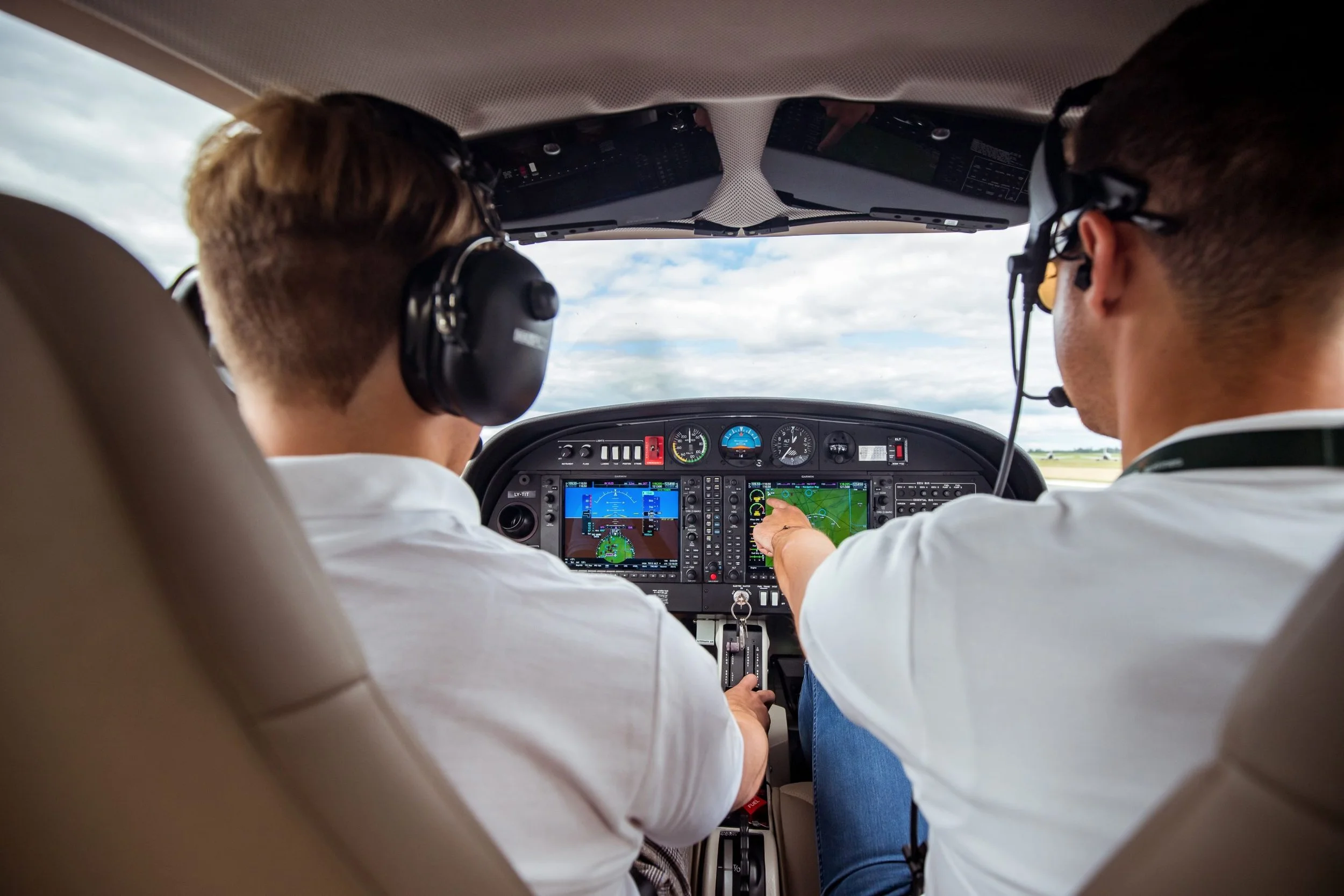
If you already hold a private pilot certificate, earning an instrument rating in Pennsylvania can be one of the most valuable next steps in your flight training. An instrument rating gives you the training and privileges needed to operate under IFR, expands the weather conditions in which you can legally fly, and builds skills that are important for pilots pursuing commercial and airline careers.
For pilots training in southeastern Pennsylvania, the location and training environment matter, too. Penn Flight Academy is based at Quakertown Airport (KUKT) in Bucks County and provides Part 61 flight training, including instrument rating instruction. Its location in the greater Philadelphia area gives students access to a regional flying environment while training toward advanced ratings.
This guide explains the FAA instrument rating in Pennsylvania , how to get an instrument rating in Pennsylvania, what IFR training at Quakertown Airport can involve, what affects the cost, how long training may take, and how to prepare for the checkride.
To earn an airplane instrument rating, you generally need a private pilot certificate or to be concurrently earning one, the required aeronautical knowledge and flight training, 50 hours of cross-country PIC experience, and 40 hours of actual or simulated instrument time, including at least 15 hours with an authorized instrument instructor. You must also pass the FAA knowledge test and practical test.
Key Takeaways
An instrument rating allows qualified pilots to operate under IFR rather than relying solely on visual references.
FAA rules under 14 CFR §61.65 establish the core instrument-rating requirements.
For an airplane instrument rating, the regulation specifies 50 hours of cross-country PIC time and 40 hours of actual or simulated instrument time, including 15 hours with an authorized instrument instructor.
Your training must include instrument procedures, navigation, approaches, ATC procedures, emergencies, and other required areas of operation.
You will need to pass the FAA Instrument Rating Airplane knowledge test and a practical test.
Training costs vary according to aircraft rental rates, instructor rates, training pace, weather, equipment, and how much experience you already have.
Consistent training is generally more efficient than taking long breaks between lessons.
An instrument rating is particularly valuable for pilots planning to continue toward commercial, CFI, multi-engine, and airline-pilot training.
What Is an Instrument Rating?
An instrument rating is an additional rating on a pilot certificate that qualifies a pilot to operate under instrument flight rules when the applicable requirements are met.
A private pilot who flies only under VFR primarily relies on outside visual references for navigation and aircraft control. Instrument training teaches a different set of skills: controlling the aircraft by reference to instruments, navigating using instrument systems, communicating with ATC, planning IFR flights, and flying instrument approaches.
That does not mean an instrument rating gives pilots permission to ignore weather or safety considerations.
In fact, good instrument training is largely about making better decisions when weather, visibility, workload, navigation, and other factors become more demanding.
The FAA requires instrument applicants to receive training in areas including:
Preflight preparation
Preflight procedures
ATC clearances and procedures
Flight by reference to instruments
Navigation systems
Instrument approach procedures
Emergency operations
Postflight procedures
The regulation also addresses aeronautical decision-making and crew resource management.
Why Get an Instrument Rating in Pennsylvania?
Pennsylvania is a practical environment for pilots who want to develop real-world instrument skills.
Weather can change quickly, and pilots may encounter clouds, reduced visibility, precipitation, and changing ceilings during different parts of the year. Instrument training teaches you how to plan around weather rather than simply treating poor weather as an automatic reason to fly or not fly.
More importantly, an instrument rating becomes an important building block for pilots pursuing professional aviation.
1. Greater flexibility
An instrument rating expands the circumstances in which you can legally operate an appropriately equipped aircraft.
Instead of being limited to VFR conditions, an appropriately qualified and current instrument-rated pilot can conduct IFR operations when the aircraft, pilot, and operation meet the applicable requirements.
2. Better weather decision-making
Instrument training teaches pilots to interpret weather information, understand forecasts and reports, plan alternate courses of action, and recognize when conditions are deteriorating.
The goal isn't simply to "fly through clouds."
The goal is to develop the judgment needed to make sound decisions before and during a flight.
3. Stronger navigation skills
IFR training requires pilots to become comfortable with navigation systems, instrument procedures, clearances, departures, arrivals, approaches, and communication with ATC.
These skills are useful well beyond the instrument checkride.
4. A foundation for professional aviation
For pilots working toward commercial aviation, the instrument rating is a major step in the training sequence.
Instrument Rating Requirements in Pennsylvania
The FAA establishes the requirements, not the state of Pennsylvania.
That distinction is important.
Whether you train at Quakertown Airport, another Pennsylvania airport, or elsewhere in the United States, the federal requirements under Part 61 apply.
For an airplane instrument rating, 14 CFR §61.65 requires specific knowledge, flight proficiency, aeronautical experience, and endorsement requirements.
Basic Eligibility
For an instrument rating, an applicant must generally:
Hold at least a current private pilot certificate, or apply concurrently for a private pilot certificate with the appropriate category/class rating.
Be able to read, speak, write, and understand English, subject to the regulatory provisions.
Complete the required aeronautical knowledge training or an acceptable home-study program.
Receive the required flight training.
Meet the applicable aeronautical experience requirements.
Pass the FAA knowledge test.
Pass the practical test
The 50-Hour Cross-Country Requirement
One of the requirements that often causes confusion is the cross-country experience requirement.
For an instrument-airplane rating, §61.65 specifies 50 hours of cross-country flight time as pilot in command, with at least 10 of those hours in an airplane, subject to the provisions and exceptions in the regulation.
This does not necessarily mean you need to fly 50 additional hours solely for your instrument rating.
Eligible cross-country experience you accumulated earlier may already count toward the requirement.
Your instructor should review your logbook early in the training process to determine what experience you already have and what remains.
That is one reason a good training plan starts with a logbook review, rather than immediately scheduling a large block of flight lessons.
The 40-Hour Instrument Requirement
For the airplane instrument rating, §61.65 requires 40 hours of actual or simulated instrument time in the applicable areas of operation.
At least 15 hours must be received from an authorized instructor who holds an instrument-airplane rating.
The regulation also specifies additional training elements, including:
Three hours of instrument flight training in an appropriate airplane within the two calendar months before the practical test.
Instrument cross-country procedures.
A qualifying IFR cross-country flight.
Instrument approaches at each airport involved in the required cross-country.
Three different kinds of approaches using navigation systems.
Your instructor should plan these requirements into the training syllabus rather than treating them as items to complete at the last minute.
What Is the Required Instrument Cross-Country?
The required instrument cross-country is an important part of the rating.
For an airplane instrument rating, the regulation calls for an IFR cross-country flight with an authorized instructor that:
Covers at least 250 nautical miles along airways or by directed routing from an ATC facility.
Includes an instrument approach at each airport.
Includes three different kinds of approaches using navigation systems.
Is conducted under IFR with a flight plan filed with an ATC facility.
This requirement is one reason aircraft capability and access to suitable airports matter when selecting an instrument training program.
How to Get an Instrument Rating in Pennsylvania
The process can be broken down into several practical stages.
Step 1: Review Your Current Experience
Before starting, review:
Your pilot certificate
Medical qualification
Total flight time
Cross-country PIC time
Previous instrument experience
Recent flight experience
Logbook accuracy
Any previous training-device experience
Your instructor can then identify the remaining requirements.
Step 2: Choose an Instrument Training Program
You can train through an independent instructor or flight school.
The important issue is not simply the label "flight school."
Look for:
An appropriately qualified instrument instructor
IFR-capable aircraft
Reliable aircraft availability
A structured training syllabus
Consistent scheduling
Appropriate avionics
Good maintenance practices
Instructors who emphasize decision-making and proficiency
A realistic path toward the checkride
Penn Flight Academy operates under Part 61 and states that it provides flexible training tailored to individual student needs.
Step 3: Begin Ground Training
Instrument flying requires significantly more planning and knowledge than simply learning to control an airplane by reference to instruments.
Ground training typically addresses areas such as:
IFR regulations
Weather
Aviation charts
Instrument procedures
Navigation systems
Flight planning
ATC clearances
Airspace
Human factors
Instrument approaches
Emergencies
Decision-making
Step 4: Prepare for the Knowledge Test
The FAA Instrument Rating Airplane knowledge test is identified as test code IRA.
The current FAA testing information lists 60 questions and a passing score of 70 percent.
Don't treat the written exam as the finish line.
A strong instrument student should be able to explain why a procedure works rather than simply memorizing answers.
Step 5: Complete Flight Training
Your flight lessons will progressively develop your ability to:
Maintain aircraft control solely by reference to instruments.
Intercept and track courses.
Navigate using available systems.
Communicate with ATC.
Fly departures and arrivals.
Enter and fly holding patterns.
Conduct instrument approaches.
Execute missed approaches.
Manage workload.
Respond to abnormal or emergency situations.
The FAA's required areas of operation are broader than simply "flying approaches."
Step 6: Complete the Required Experience
Your instructor should track your:
Instrument time
Instructor time
Cross-country PIC experience
Required IFR cross-country
Approaches
Training-device time, where applicable
Required recent training
Keep your logbook accurate throughout the process.
Step 7: Prepare for the Checkride
Before recommending you for the practical test, your instructor will evaluate your knowledge and proficiency against the applicable FAA standards.
The practical test includes both an oral component and flight tasks.
The FAA's Instrument Rating Airplane ACS provides the standards used for evaluating applicants.
Step 8: Take the Practical Test
Once you meet the applicable requirements and are prepared for the practical test, you'll complete the checkride with an authorized examiner.
Passing the checkride adds the instrument rating to your pilot certificate.
IFR Training at Quakertown Airport
For pilots searching for IFR training at Quakertown Airport, the training environment is an important consideration.
Penn Flight Academy is located at Quakertown Airport in northwestern Bucks County, Pennsylvania, and describes itself as a flight training center serving the greater Philadelphia area.
The airport location gives students a practical base for instrument training while remaining accessible to pilots in the broader Philadelphia-area market.
A local instrument program can also make it easier to maintain a consistent training schedule.
That matters because instrument skills are procedural and cumulative. If too much time passes between lessons, you may spend part of your next flight reviewing skills that you previously had mastered.
How Much Does an Instrument Rating Cost in Pennsylvania?
There is no single price for an instrument rating.
The FAA establishes training requirements, but your total cost depends on the aircraft, instructor, training pace, existing experience, weather, equipment, and proficiency.
Why Minimum-Hour Pricing Can Be Misleading
A flight school may advertise a package based on minimum regulatory hours.
That does not mean every student will finish at that exact number.
One student may already have substantial cross-country experience and progress quickly through instrument procedures.
How Long Does Instrument Training Take?
There is no universal timeline.
A student who trains several times per week may progress differently from someone who flies once every few weeks.
Factors That Affect Training Time
Previous flying experience
Existing cross-country time
Frequency of lessons
Weather
Aircraft availability
Instructor availability
Study habits
Instrument scan proficiency
Radio communication skills
Navigation proficiency
Ability to interpret charts and procedures
Checkride preparation
One of the strongest practical lessons from instrument training is consistency.
The Lightspeed Aviation competitor article similarly emphasizes that long gaps between lessons can create additional review and increase total training time.
For most students, a predictable schedule is more useful than trying to complete isolated lessons whenever time becomes available.
What Aircraft Do You Need for Instrument Training?
You need access to an aircraft and training environment appropriate for the instrument rating requirements.
An IFR training aircraft should have the equipment necessary for the operations and approaches you are expected to train and demonstrate.
Before beginning, ask:
Is the aircraft approved and equipped for IFR operations?
What navigation equipment is installed?
What approach types can the aircraft support?
Is the aircraft maintained and dispatched reliably?
How often is the aircraft available for training?
What happens if the aircraft goes down for maintenance?
Are there backup aircraft available?
The aircraft should support the training required by your syllabus and the applicable FAA requirements.
Actual vs. Simulated Instrument Time
Instrument training can involve actual instrument conditions and simulated instrument conditions.
Actual Instrument Conditions
You are operating in conditions where the aircraft is actually in the clouds or other conditions requiring flight by reference to instruments.
Simulated Instrument Conditions
You use an approved view-limiting device or qualifying training device while the appropriate safety and regulatory requirements are met.
The FAA also permits certain training-device time to count toward instrument aeronautical experience when the applicable requirements are satisfied.
Your instructor should determine which combination is appropriate for your training plan.
Benefits of an Instrument Rating
More Than a Checkride
An instrument rating isn't simply another line on your certificate.
It changes the way you approach flight planning and risk management.
Improved Weather Awareness
Instrument training makes weather analysis a central part of the flight-planning process.
Better Aircraft Control
You learn to maintain control without relying primarily on the horizon.
Stronger Navigation Skills
You become more comfortable with IFR charts, navigation systems, procedures and clearances.
Greater Professional Readiness
Instrument skills become increasingly important as you progress into commercial and airline-oriented training.
Better Decision-Making
Instrument training exposes pilots to higher workloads and teaches them to manage information, prioritize tasks and recognize risks.
Common Mistakes During Instrument Training
1. Training Too Infrequently
Long gaps between lessons often result in skill regression and additional review.
Better approach: establish a realistic recurring schedule.
2. Memorizing Instead of Understanding
Memorizing approach procedures without understanding them can create problems when something changes.
Better approach: understand the logic behind the procedure.
3. Ignoring Weather Planning
Instrument flying requires serious weather analysis.
Better approach: make weather planning part of every lesson.
4. Focusing Only on the Minimum Hours
The legal minimum is not necessarily the proficiency level required for you to be a safe, confident pilot.
Better approach: budget for proficiency, not merely the minimum.
5. Neglecting Radio Work
ATC communication can become a major workload during IFR operations.
Better approach: practice clearances, readbacks and communications during training.
6. Waiting Until the End to Prepare for the Checkride
Checkride preparation should not begin a few days before the practical test.
Better approach: use the FAA ACS throughout training.
7. Ignoring Logbook Details
Missing endorsements or poorly documented experience can create unnecessary delays.
Better approach: have your instructor periodically audit your logbook against §61.65.
Best Practices for Instrument Students
Study Before the Flight
Review the procedures you expect to practice before getting into the airplane.
Chair-Fly
Mentally rehearse:
Checklists
Radio calls
Holds
Approaches
Missed approaches
Navigation procedures
Know Your Instruments
Don't wait until you're airborne to figure out how the avionics work.
Practice Workload Management
Instrument flying is not just about keeping the wings level.
You may simultaneously be:
Flying the airplane
Monitoring instruments
Communicating with ATC
Tracking navigation
Managing checklists
Reviewing the approach
Watching weather
Preparing for the next phase of flight
Use the ACS as a Training Roadmap
The FAA ACS tells you what will be evaluated.
Use it throughout training rather than treating it as a document you open shortly before the checkride.
Expert Tips for a Faster, Better Instrument Rating
Keep Your Lessons Connected
If possible, schedule lessons close enough together that each flight builds on the previous one.
Combine Ground and Flight Training
If you learn a procedure on the ground and practice it in the airplane soon afterward, the connection between knowledge and execution becomes stronger.
Track Your Requirements
Keep a simple checklist of:
Cross-country requirements
Instrument time
Instructor time
Required approaches
Required cross-country
Recent training
Knowledge test
Practical-test preparation
Choose Training Equipment Carefully
Modern avionics can be valuable, but students should understand the underlying concepts rather than simply following magenta lines.
Ask About the Full Training Environment
When comparing Pennsylvania flight schools, ask about:
Aircraft
Avionics
Maintenance
Instructor availability
Scheduling
Training structure
Weather policies
Checkride preparation
Total estimated cost
Instrument Rating Training Checklist
Use this checklist when preparing to start your training.
Before Training
Review your pilot certificate
Review your medical qualification
Review your logbook
Determine your cross-country PIC time
Identify remaining FAA requirements
Choose an instrument instructor
Confirm IFR aircraft availability
Review aircraft avionics
Build a realistic training budget
Create a recurring lesson schedule
During Training
Complete ground instruction
Prepare for the IRA knowledge test
Practice instrument scan
Practice ATC communication
Practice navigation
Practice holding procedures
Practice instrument approaches
Practice missed approaches
Complete required cross-country experience
Maintain accurate logbook records
Review ACS standards regularly
Before the Checkride
Complete required aeronautical experience
Complete required instructor training
Complete the required recent training
Pass the knowledge test
Review weak areas
Complete mock oral preparation
Complete mock practical preparation
Confirm endorsements and paperwork
Schedule the practical test
Staying Current After You Earn Your Instrument Rating
Getting the rating is only the beginning.
To act as pilot in command under IFR, pilots must maintain the applicable instrument experience requirements.
Under §61.57, within the preceding six calendar months, a pilot generally needs to have logged:
Six instrument approaches
Holding procedures and tasks
Intercepting and tracking courses using navigation systems
If a pilot fails to meet the instrument experience requirements for more than six calendar months, an instrument proficiency check is required to reestablish instrument currency.
That means instrument proficiency should become a continuing part of your flying rather than something you revisit only when you need to use the rating.
Frequently Asked Questions
1. How do I get an instrument rating in Pennsylvania?
You follow the FAA's federal requirements under 14 CFR §61.65. Generally, you need the appropriate pilot certificate, required knowledge and flight training, aeronautical experience, the FAA knowledge test, and the practical test.
2. How many hours do you need for an instrument rating?
For an airplane instrument rating, §61.65 specifies 40 hours of actual or simulated instrument time and 50 hours of cross-country PIC experience, subject to the regulation's detailed requirements and exceptions. At least 15 of the required instrument hours must be with an authorized instrument instructor.
3. Do I need a private pilot license before an instrument rating?
You generally need at least a current private pilot certificate, or you can apply concurrently for a private pilot certificate with the appropriate category/class rating.
4. How much does an instrument rating cost in Pennsylvania?
The total cost varies by student and school. Aircraft rental, instructor rates, training time, testing, equipment, weather and your existing experience all affect the final amount. Ask the flight school for a current estimate based on your logbook and training plan.
5. Can I use simulator time toward an instrument rating?
Certain training-device time can count toward instrument aeronautical experience when the applicable FAA requirements are met. Your instructor should determine what device and amount of time can legally be credited toward your training.
6. What is IFR training?
IFR training teaches pilots to operate according to instrument flight rules and to control, navigate and manage an aircraft using instruments and applicable procedures rather than relying solely on visual references.
Why Choose Penn Flight Academy for Instrument Training?
Choosing an instrument program is about more than finding an airplane and an instructor.
You want a training environment that supports your long-term goals.
Penn Flight Academy is located at Quakertown Airport in Bucks County and serves pilots from the greater Philadelphia area. The academy has been operating for more than 10 years and says it has trained hundreds of students, including pilots who progressed into regional and major airline careers.
The academy also emphasizes a safety-first approach and operates under Part 61, providing flexible training options tailored to individual students.
For pilots who plan to continue beyond the instrument rating, Penn Flight offers a broader progression that includes commercial, multi-engine, CFI/CFII, multi-engine instructor and ATP training.
Ready to Start Instrument Rating Training in Pennsylvania?
An instrument rating is one of the most valuable steps you can take after earning your private pilot certificate.
It can improve your ability to manage weather, navigate using instruments, communicate with ATC, fly instrument procedures, and make better decisions in challenging operating environments. For pilots pursuing professional aviation, it also provides an important foundation for commercial and advanced flight training.
The best place to start is with an honest assessment of where you are now.
Review your logbook, identify your remaining FAA requirements, discuss your goals with an experienced instructor, and build a training schedule that prioritizes consistent practice and proficiency.
If you're looking for instrument rating training in Pennsylvania or IFR training at Quakertown Airport, contact us to discuss your experience, training goals, aircraft options, schedule and next steps.
Ready to continue your pilot training? Book a Discovery Flight with Penn Flight Academy and start planning your instrument training pathway.
FAA regulations and requirements can change. Always verify current requirements with the FAA and your authorized flight instructor before beginning or completing training.
